
Join us for an engaging and enlightening webinar series as we delve into the fascinating world of bone anatomy, the intricate processes of bone healing, and the innovative applications of bioactive glasses!
Designed to take participants on a comprehensive journey, this series begins with the fundamentals of bone anatomy and physiology and gradually transitions to advanced case studies focusing on the treatment of osteomyelitis using cutting-edge biomaterials.
Led by an expert in the field, each session will blend scientific insights with real-world clinical applications, ensuring a rich and thought-provoking learning experience. Participants will gain fundamental knowledge, explore emerging trends in biomaterials, and examine their practical use in complex medical scenarios. Whether you're a seasoned professional or new to the field, this series promises to deepen your understanding and inspire new perspectives on bone health and regenerative medicine.

For whom is this webinar intended?
Main takeaway from the webinar!
Improve fundamental understanding of bone composition, bone physiology and bone biomechanics.
Improve understanding and clinical decision making options in biomaterial choice for various bone defect healing indications.
Improve understanding of S53P4 bioactive glass and its application in osteomyelitis treatment.
Improve knowledge about pro’s and con’s of commonly used biomaterials in bone defect healing.
Improve understanding of regenerative capacity of bone and biomaterials.
You'll be in good hands!
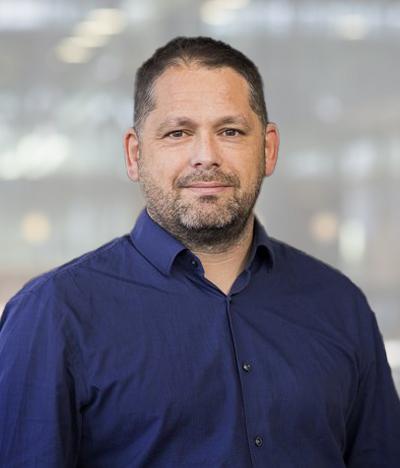
Chris Arts is a Professor specializing in Translational Biomaterials at both the Orthopaedic Biomechanics research group at TU/e Eindhoven and the Maastricht University Medical Centre, where he leads the Laboratory for Experimental Orthopaedics.
His clinical research focuses on developing biomaterials for applications in delayed bone healing, infection prevention and treatment, and spinal deformity correction. This work involves assessing the mechanical and biological performance of biomaterials in terms of safety and efficacy, as well as tracking metabolic changes over time. By integrating high-resolution imaging with computational modeling, his research evaluates how biomaterials are incorporated, remodeled, and resorbed.
Questions?
Feel free to head over to FAQ page.
Haven't found your question? Don't hesitate to contact us!